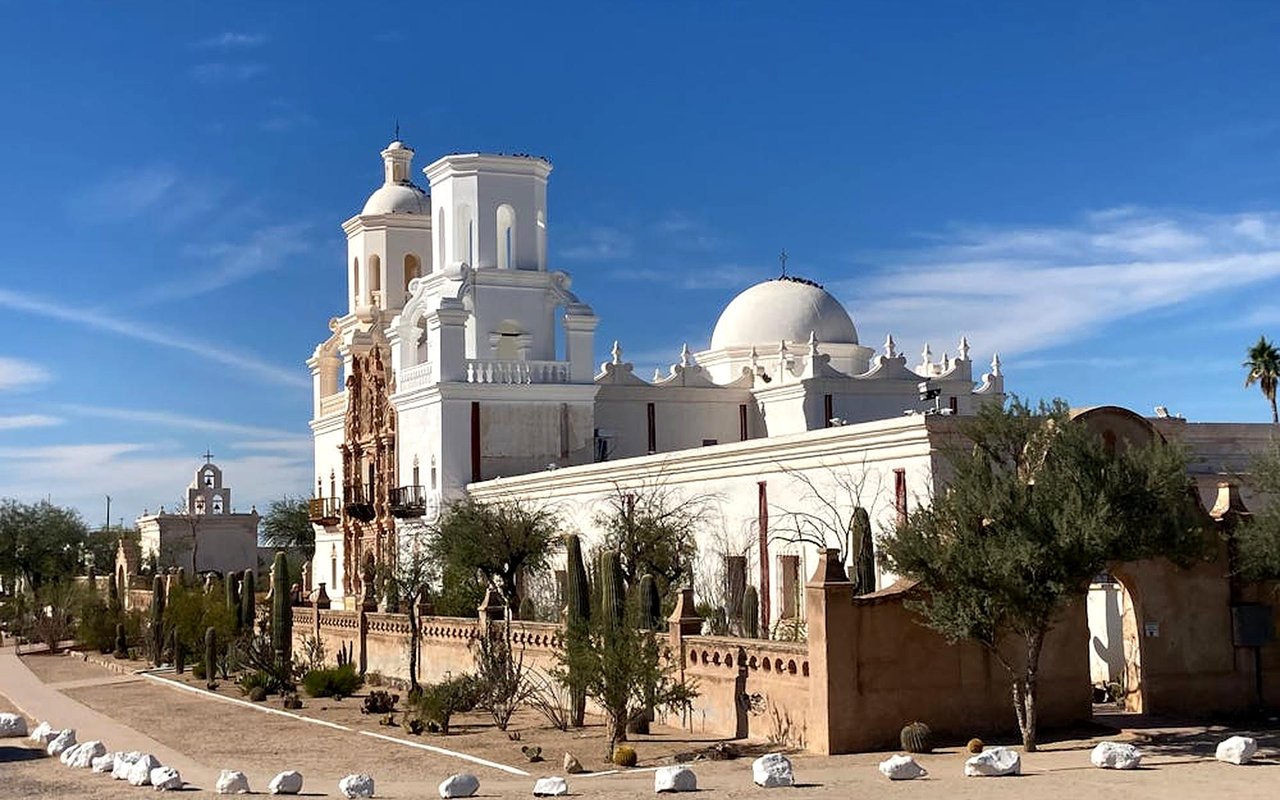
Tucson isn’t defined by just one attraction; it’s shaped by centuries of history, dramatic desert landscapes, and a culture that’s distinctly Southwestern. From iconic missions and mountain trails to vibrant arts districts and aviation history, the city’s landmarks tell the story of where Tucson has been—and where it’s going. If you want to get a true sense of place, exploring the city’s most notable sites is the perfect place to start.
1. Mission San Xavier del Bac
Located just 10 miles south of downtown, Mission San Xavier del Bac is often called the "White Dove of the Desert," and it's easy to see why. Founded in 1692 by Spanish missionaries, this stunning Catholic mission remains an active parish and one of the most significant architectural and cultural sites in Arizona.
Visitors are drawn to its ornate baroque interior, historic frescoes, and peaceful desert surroundings. As one of the most iconic landmarks to visit in Tucson, it also serves as a window into the city’s deep Native American and Spanish colonial heritage. The mission sits on the Tohono O’odham Nation and continues to play an important role in the local community.
2. Sabino Canyon
For those who appreciate Tucson’s natural beauty, Sabino Canyon in the Coronado National Forest is a must-visit. Located in the foothills of the Santa Catalina Mountains, this area offers miles of hiking trails, wildlife viewing, and scenic tram rides through the canyon.
What sets Sabino Canyon apart is its accessibility; you can experience the Sonoran Desert’s rugged landscape without leaving the city limits. It’s especially popular in the cooler months and a top destination for families, nature enthusiasts, and photographers. Its consistent popularity makes it one of the most treasured outdoor landmarks to visit in Tucson.
3. University of Arizona and the Arizona State Museum
The University of Arizona is a cultural landmark in its own right. Located in central Tucson, the university’s campus is home to impressive architecture, historic buildings, and public spaces that regularly host art, music, and community events.
On campus, you’ll also find the Arizona State Museum, one of the oldest and most respected anthropological museums in the Southwest. With exhibits focusing on Native American history, archaeology, and regional culture, it’s a meaningful stop for anyone who wants to deepen their understanding of Southern Arizona.
4. Arizona-Sonora Desert Museum
Part botanical garden, part zoo, and part natural history museum, the Arizona-Sonora Desert Museum offers a hands-on experience of the desert ecosystem. Just west of Tucson near Saguaro National Park, it spans 98 acres of desert landscape with walking paths, interactive exhibits, and live animal habitats.
This landmark is especially useful for new residents or visitors looking to understand Tucson’s flora and fauna. It’s a great destination for families and is frequently ranked among the top landmarks to visit in Tucson thanks to its educational value and stunning setting.
5. El Presidio Historic District and Old Town Artisans
Tucson’s history comes alive in the El Presidio Historic District, one of the oldest inhabited areas in the city. Here, you'll find Adobe homes, narrow streets, and a blend of Spanish, Mexican, and Anglo-American architecture. The area is anchored by Old Town Artisans, a restored marketplace featuring local art galleries, artisan shops, and cafes housed in an 1850s adobe complex.
Walking through this district feels like stepping back in time, and it highlights the layers of culture that have shaped Tucson over the centuries. For those interested in architecture, history, or supporting local artists, this district remains one of the most charming destinations in the city.
6. Saguaro National Park
Few images are more iconic of Tucson than the silhouette of a saguaro cactus against a desert sunset. Saguaro National Park, which bookends the city to the east and west, protects these towering desert giants and offers some of the best hiking, scenic drives, and photo opportunities in the region.
The park is a standout among Tucson’s natural landmarks, and its proximity to residential areas adds to its appeal for both visitors and locals. Residents in areas like the Catalina Foothills or Vail enjoy quick access to the park's trailheads, making it a real part of daily life for outdoor enthusiasts.
7. Pima Air & Space Museum
Aviation buffs and curious visitors alike will enjoy the Pima Air & Space Museum, one of the largest of its kind in the world. Located near Davis-Monthan Air Force Base, the museum showcases over 400 aircraft across indoor and outdoor exhibits, including historic military planes, commercial jets, and space exploration artifacts.
It’s a landmark that reflects Tucson’s strong ties to aerospace and defense, industries that continue to shape the city’s economy. The museum also connects to “The Boneyard” (the 309th Aerospace Maintenance and Regeneration Group), a vast aircraft storage facility that’s visible from the museum grounds.
8. Sentinel Peak (“A” Mountain)
Overlooking downtown Tucson, Sentinel Peak, more commonly known as “A” Mountain, is a beloved local landmark and an easy way to catch a panoramic view of the city. The large "A" painted on the mountain represents the University of Arizona and dates back to the early 20th century.
The road to the top is open during specific hours, and the view from the summit offers one of the best vantage points of Tucson’s skyline and surrounding desert. Locals often bring guests here for sunset photos or to get their first look at the city from above.
Why Landmarks Matter for Residents
For current and prospective residents, these landmarks create a sense of place. Tucson’s mix of cultural, historic, and natural sites contributes to the city’s identity and quality of life. Living near Sabino Canyon or the El Presidio district doesn’t just offer convenience; it offers daily access to the very things that make Tucson special.
That’s why buyers often prioritize proximity to parks, museums, and historic districts when searching for homes. Whether you're an outdoor enthusiast, a history buff, or someone who values a culturally rich neighborhood, knowing the key landmarks in Tucson can help guide your real estate decisions.
Ready to Explore Homes Near These Landmarks?
Whether you’re relocating, investing, or searching for a home that brings you closer to the city’s most iconic places, working with local experts can make all the difference. Tucson’s neighborhoods offer unique access to its landmarks, many within walking distance or a short drive from the city’s best attractions.
To explore homes near your favorite Tucson destinations or get tailored advice on neighborhoods, connect with
The Alder Group. Their local expertise and insight into Tucson’s most desirable areas will help you find a home that fits your lifestyle and puts you close to the places that make this city unforgettable.