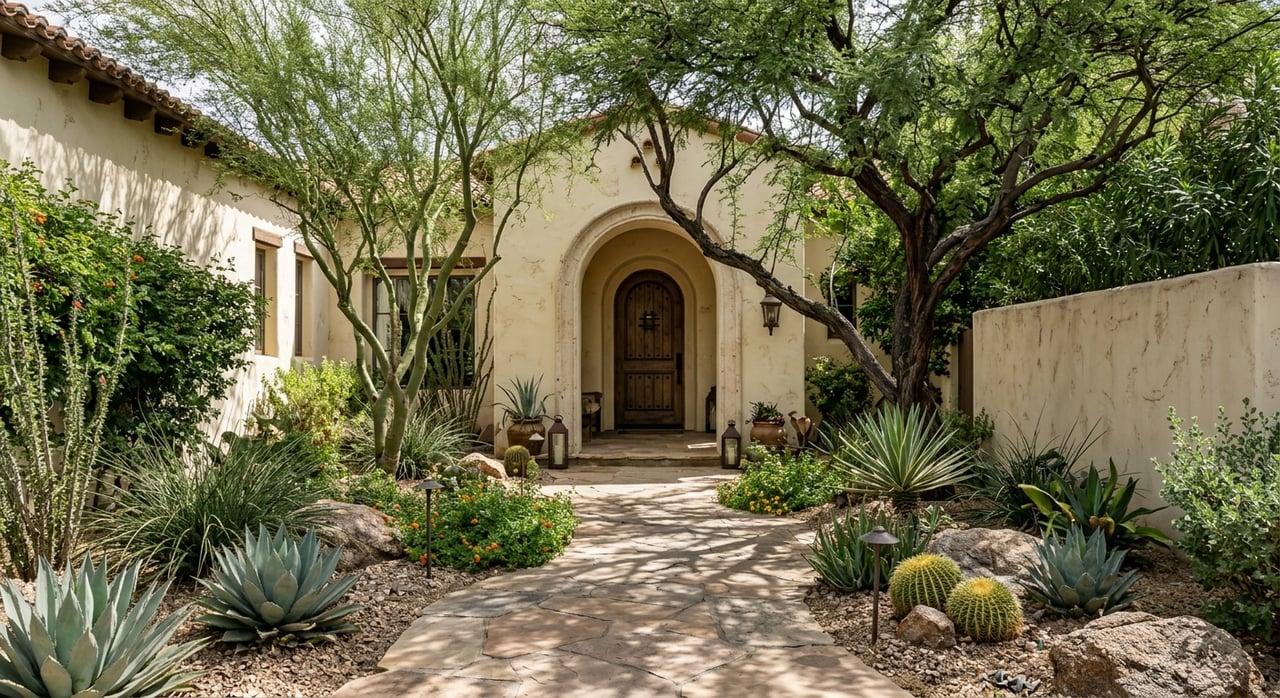
If you are deciding between a brand-new home and an existing one in Oro Valley, you are not just comparing paint colors or countertops. You are choosing between two very different buying paths in a market with limited new supply, established neighborhoods, and a lifestyle many buyers want to hold onto for the long term. This guide will help you weigh timing, cost, customization, upkeep, and location so you can make a smart move with confidence. Let’s dive in.
Oro Valley is not a market with endless room to build. The town’s housing data shows that most of its housing stock was built between 1980 and 2010, less than 10% has been built since 2010, and only a limited number of additional residential units remain possible under current zoning.
That matters because your choice is not happening in a vacuum. In Oro Valley, resale homes make up the larger share of available ownership housing, while new construction is a narrower product with more limited supply. In simple terms, you will usually have more resale options, but fewer chances to buy brand new.
The market also tends to move at a moderate pace rather than a frantic one. Recent market data showed a median sale price of $494,204, about 70 days on market, and an average sale-to-list ratio of 98.1%, with many listings seeing price reductions.
New construction usually appeals to buyers who want a cleaner slate. In Oro Valley, that can mean selecting a homesite, structural options, exterior style, and interior finishes depending on the builder and stage of construction.
That level of personalization is the biggest advantage of buying new. Instead of adapting to someone else’s layout choices, you may be able to shape the home around how you actually live.
New homes in Oro Valley are built under current local code requirements. The town adopted the 2024 Building Codes and the 2023 National Electrical Code effective January 1, 2026, and new homes generally require permit review for building, electrical, plumbing, and mechanical work.
For you, that means the process is tied to permits, inspections, and code compliance. It is not just about picking a floor plan and waiting for the keys.
Many newer neighborhoods are also shaped by planned-area development rules, often called PADs. These communities may feel more coordinated because they are built around neighborhood plans, circulation patterns, open space, and community design standards.
The first tradeoff is timeline certainty. A resale home already exists, but a new home closing date can change during the construction process.
The second tradeoff is price transparency. Builder pricing may start with a base price, but that may not include lot premiums, structural upgrades, or design selections. If you are comparing monthly costs, make sure you are looking at the real all-in number rather than the headline price.
The third tradeoff is flexibility after closing. The town advises property owners to review HOA and subdivision rules, which is especially important in newer communities where private restrictions may affect exterior changes, landscaping choices, or other modifications.
Resale homes are the more common path in Oro Valley because they make up the bulk of the town’s housing stock. If you want more choices by location, lot type, neighborhood feel, or move-in timing, resale may give you a wider field to work with.
For many buyers, the strongest resale advantage is immediacy. The house is already built, the lot is already established, and the closing timeline is usually more predictable than a home still under construction.
Established neighborhoods often come with a stronger sense of place because they are already woven into the daily rhythm of the town. In Oro Valley, that can include access to parks, nearby shopping, and recreation routes such as the town’s trail system and The Loop, which connects neighborhoods and local destinations.
Resale homes may also offer mature landscaping, established streetscapes, and lot characteristics that are harder to replicate in newer development. If location is your top priority, an existing home may put you closer to the specific part of Oro Valley you want.
With a resale purchase, condition matters more. Pima County notes that residential property values are assessed using factors such as size, age, quality, condition, and location, which is a useful reminder that not all older homes should be viewed the same way.
That is why inspections carry real weight. In Oro Valley, buyers should pay close attention to HVAC age, roof condition, insulation, shade, and landscape maintenance, especially given the area’s severe heat and wildfire risk noted in market climate data.
A well-kept resale can be a strong long-term fit. But an attractive location does not erase deferred maintenance, so it is worth looking beyond the finishes and into the systems.
Here is the cleanest way to frame the decision.
| Factor | New Construction | Resale Home |
|---|---|---|
| Inventory | More limited in Oro Valley | Larger share of available housing |
| Customization | Stronger opportunity to personalize | Mostly fixed as-is at purchase |
| Move-in Timing | Can change during construction | Usually more predictable |
| Systems and Code | New systems, built under current code | Condition varies by age and upkeep |
| Neighborhood Feel | Often more controlled and amenity-oriented | Often more established and location-driven |
| Pricing | Base price may exclude premiums and upgrades | Price reflects current condition and location |
If you want personalization and a fresh start, new construction may be the better fit. This is often the right path when you care most about modern layouts, current code standards, and selecting finishes that match your style.
If you want a more certain move-in date and a broader range of neighborhoods, resale may make more sense. This can be especially true if trail access, lot placement, mature landscaping, or a specific part of Oro Valley is high on your list.
If you are focused on monthly ownership cost, compare more than the purchase price. Pima County states that property taxes are assessed annually and paid in two installments, so it is smart to look at escrow expectations, tax impact, and likely near-term repair costs alongside your mortgage payment.
One of the most important local factors is simple: Oro Valley is largely built out. The town has estimated a finite number of additional residential units under existing zoning, which suggests that new supply is not unlimited.
That does not mean one option is automatically a better investment than the other. It does mean scarcity can support the appeal of well-located resale homes in established neighborhoods, while new homes may justify a premium through newer systems, modern design, and lower immediate maintenance needs.
In other words, value in Oro Valley is often about fit. The right home is the one that matches your timeline, budget, lifestyle, and tolerance for future work.
Before you move forward, ask questions that go beyond surface-level features.
These questions can help you avoid a decision based only on what looks best online. They bring the conversation back to how the home will work for you in real life.
In Oro Valley, new construction is usually the more limited and customizable option. Resale is usually the broader and more established option, often with faster availability and stronger neighborhood variety.
Neither path is automatically better. If you want control, newer systems, and a polished blank slate, new construction may be worth the tradeoffs. If you want location, immediacy, and a deeper pool of homes to choose from, resale may be the smarter play.
The key is knowing what matters most before you start touring homes. If you want tailored guidance on where the best fit may be for your goals in Oro Valley, connect with The Alder Group.

100 N Stone Ave, Suite 100 Tucson, AZ 85701
100 N Stone Ave, Suite 100 Tucson, AZ 85701